Pistachio Shell Polymer Composites
Evaluating low-density polyethylene (LDPE) matrix structural changes using agricultural byproduct powder fillers.
Polymer Composite Materials from Agricultural Waste
Researched by Selvedin Kurtic & Dr. Luis Cabrales within the Department of Mechatronics Engineering, California State University, Monterey Bay.
Core Project Objective: Evaluate the distinct mechanical performance impacts of localized pistachio shell particle sizes and filler mass concentrations when compounded into low-density polyethylene (LDPE) matrices.
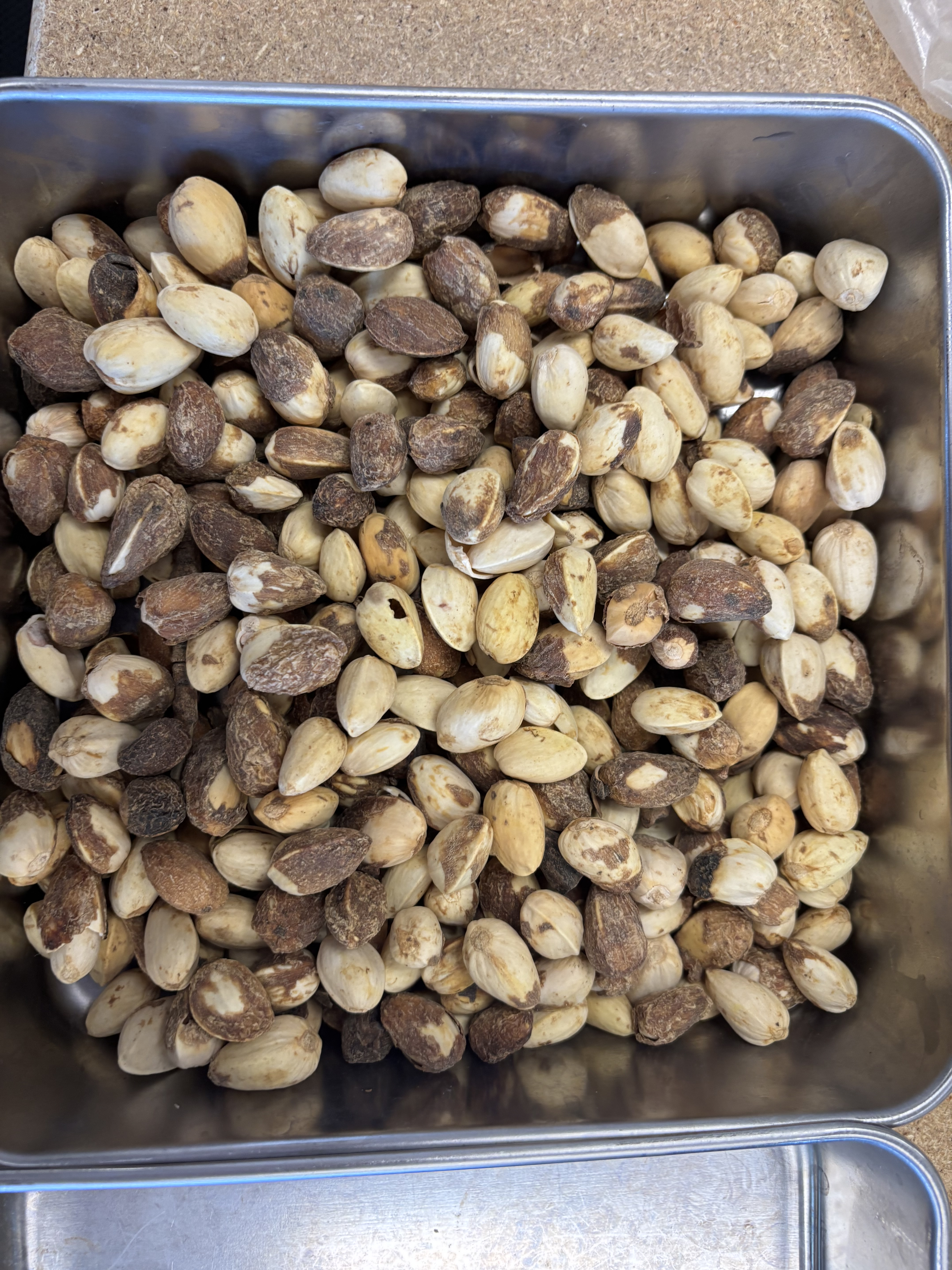
By replacing conventional, non-renewable mineral options like calcium carbonate with pre-consumer agricultural byproducts, this research addresses sustainability. Processing raw rejects yields an immediate 30.06% material mass reduction upon complete cleaning and drying cycles.
Bio-Powder Synthesis & Extrusion Compounding
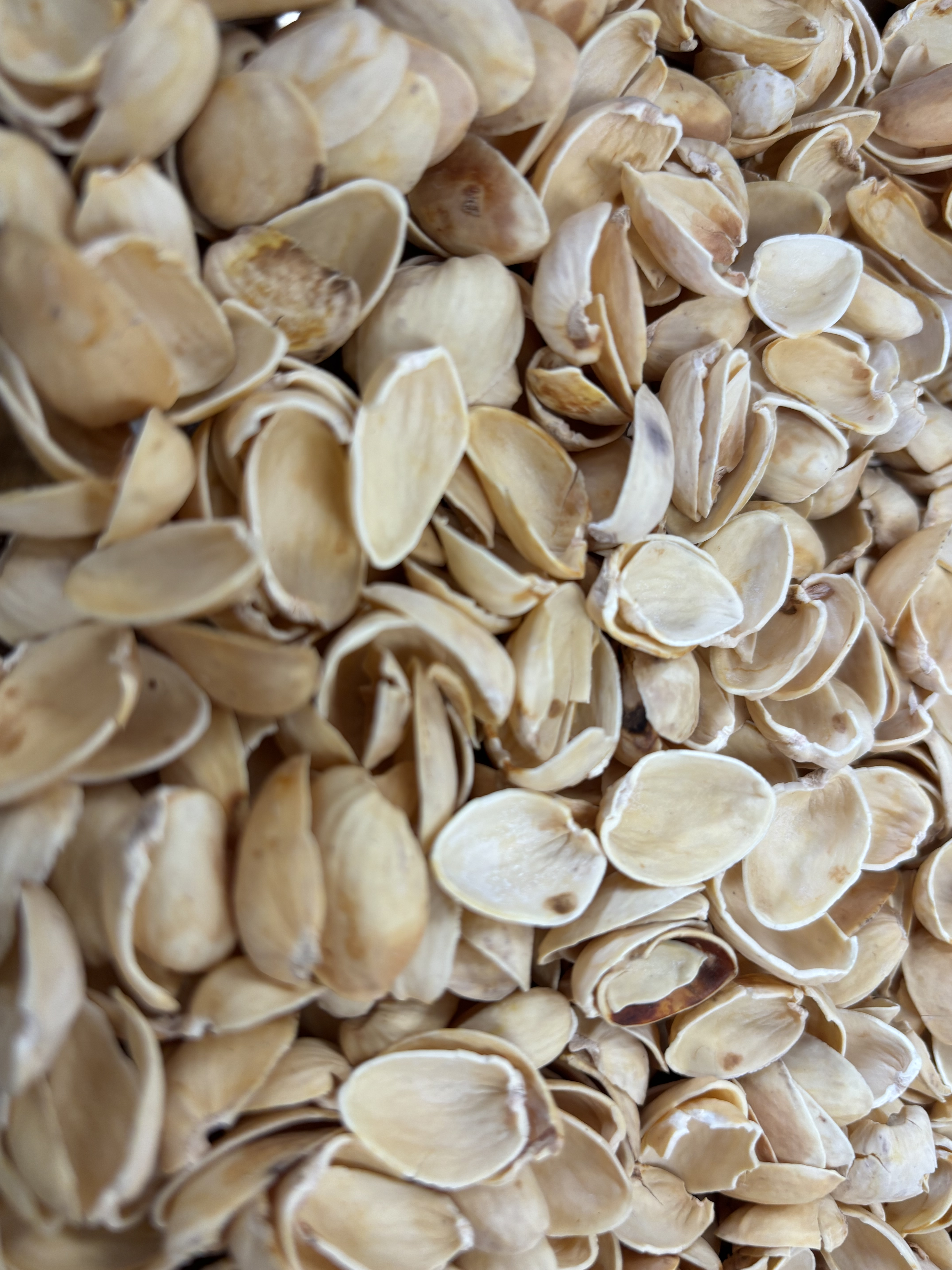
Raw pistachio hulls were thoroughly washed, dried in a laboratory oven, mechanically ground, and filtered through sifter pans to isolate 60, 120, and 230 Mesh sizing tiers.
Measured weight percentages of the bio-powder were compounded with 50g of raw LDPE pellets using a specialized Laboratory Mixing Extruder. The resulting composite filament streams were pelletized into uniform material feeds before being loaded into an injection molding machine to stamp out standardized tensile dog-bone test specimens.
Data Verification & Stress Scale Benchmarks
To ensure high statistical precision and isolate random outliers, a sample size of N = 40 specimens was validated per individual composite mixture variation. (40 Samples Per Mixture to make a total of 600 samples over 15 mixtures)
Over 600 independent mechanical stress trials were conducted on the Instron Universal Testing Machine. Central tendency metrics were charted dynamically, mapping average peak forces and continuous elongation curves rather than relying on isolated material data points.

Performance Drops & Sizing Metrics
Tensile testing revealed that adding pistachio shell powder increases overall rigidity and stiffness but reduces maximum elongation properties. Finer particle sizes preserved material strength best: the average force drop-off under load was limited to 8.11% for 63 µm particles, compared to 9.77% for 125 µm and 13.39% for larger 250 µm particles.
Optimal Performance 'Sweet Spots': The 125 µm and 63 µm grain sizes achieved maximum performance at a 10% load concentration. At this threshold, the 125 µm composition maximized structural elongation at break while experiencing only a minor 1.64% drop in maximum force and a 2.75% change in total force load.

Research Conclusions & Upcoming Material Phases
Conclusion: While adding bio-fillers slightly reduces maximum material force bounds compared to pure controls, fine-grain sieved shell powders offer a viable, sustainable eco-filler that decreases reliance on raw plastics.
Upcoming Research Phases: I am actively expanding this study to evaluate alternative agricultural byproducts and matrix compounds. Future trial loops will transition from pure tensile stress tests toward rigorous compression testing methodologies to isolate deformation thresholds under load.
Acknowledgements: Special thanks to Dr. Luis Cabrales for creating this research project and providing academic guidance. Additional technical thanks to Javier Coyt for specialized support inside the mechatronics engineering laboratory.
